The VPP Latency Trap: Why Cloud Telemetry Cannot Save the Grid
Why Eskom just exposed the fatal execution flaw in aggregated Virtual Power Plants and the exact edge compute architectures Deal Desks must mandate to protect Demand Response revenues.
The Market Anchor On January 20 2026 Eskom abruptly escalated the national grid to Stage 5 load shedding. The public narrative immediately blamed a synchronized cluster of boiler tube leaks at aging coal fleets combined with a severe drop in midday renewable generation.
The public blamed the coal. The forensic engineering reality points to a catastrophic failure of the modern Demand Response market.
To bridge the gap during rapid generation losses Eskom heavily relies on the Virtual Power Station aggregator model. These private aggregators pool massive Commercial and Industrial (C&I) loads and promise the System Operator that they can instantly shed megawatts of demand to act as a virtual spinning reserve.
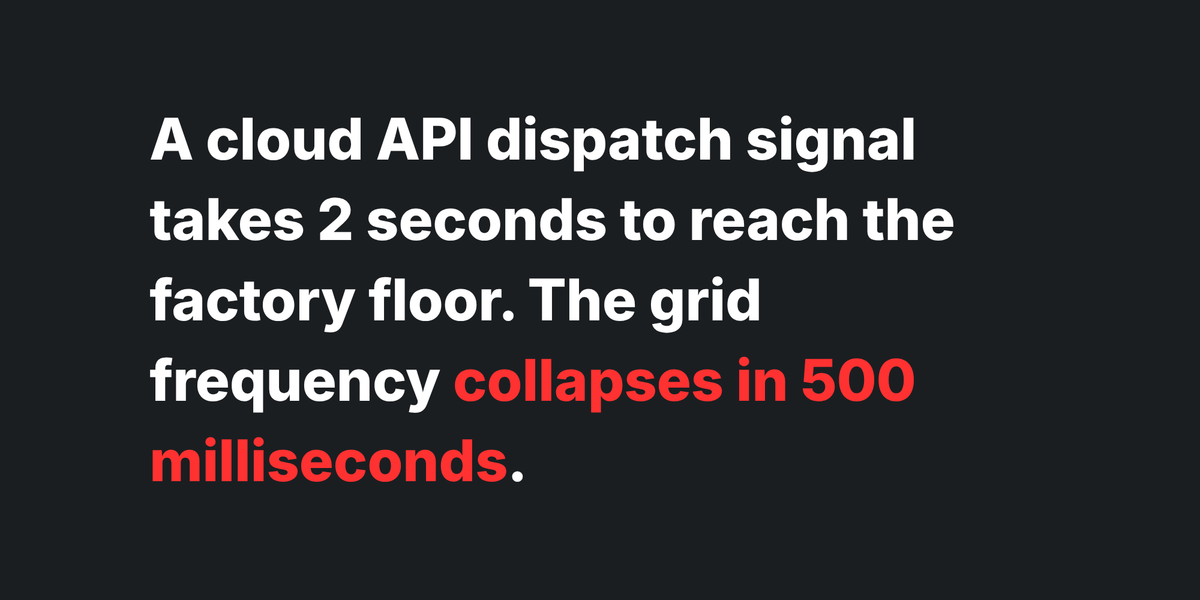
But when the frequency began to violently decay on January 20 the virtual power plant failed to deploy fast enough. The cloud based SCADA signals communicating with hundreds of disparate industrial sites suffered compounding latency. By the time the digital command reached the factory floor and the mechanical relays physically opened the frequency had already slipped past the critical trip threshold.
The Multidisciplinary Blast Radius A Virtual Power Plant is a software illusion if it cannot execute in the sub cycle physical realm. If your Special Purpose Vehicle relies on Demand Response or Ancillary Services revenue your financial model is mathematically exposed to network latency.
- The Aggregator and Developer Risk: You sold the System Operator a contract based on total megawatt capacity but you failed on millisecond execution. If your IoT edge devices rely on standard cellular telemetry to receive curtailment signals you will consistently fail Fast Frequency Response compliance. The utility will legally revoke your Demand Response contract.
- The C&I Off Taker Risk: Heavy industry cannot execute an instantaneous zero second load drop. If you instantly sever power to a glass furnace an extrusion line or a mining ventilation shaft you cause millions of dollars in mechanical damage.
- The Lender Risk: Infrastructure debt is increasingly being sized against stacked revenue models. If the spreadsheet assumes 20 percent of the project cash flow will come from selling automated grid support those cash flows will instantly drop to zero when the System Operator penalizes the asset for delayed dispatch.