The Thermal Derating Trap: Surviving BESS Capacity Collapse
Why HVAC distribution flaws at the NamPower Khan project forced the BESS to artificially derate its capacity and the exact Delta T engineering mandates Deal Desks must execute to survive thermal throttling.
The Market Anchor On May 25 2026 commissioning engineers at the NamPower Khan solar and storage project in Namibia logged a catastrophic operational failure. During early heat cycling tests the newly deployed lithium ion battery storage asset exhibited a severe capacity degradation profile.
The public relations teams framed this as a routine commissioning delay. The forensic engineering reality is a multi million dollar hardware cannibalization event.
Technical diagnostics revealed that the actual lithium ion cells were fine. The failure was entirely mechanical. The integrated HVAC and liquid cooling system possessed a major airflow and fluid distribution flaw. Cold coolant was not reaching the extremities of the racks resulting in localized hot spots across several containerized battery modules.
Because lithium ion cells are highly volatile the Battery Management System executed its primary self preservation protocol. To prevent the hot spots from triggering a cascading thermal runaway and burning the container to the ground the software mathematically derated the maximum discharge threshold of the entire asset. The multi million dollar battery was artificially throttled.
The Multidisciplinary Blast Radius A 15 year financial model assumes the battery can charge and discharge at its absolute factory nameplate capacity. When localized heat forces the software to cap your discharge rate your financial yield is instantly destroyed.
- The IPP and Developer Risk: If you secured a premium Power Purchase Agreement based on providing aggressive high frequency regulation to the national grid your entire revenue model is broken. Frequency regulation requires massive instantaneous power spikes. If your battery is thermally derated you cannot deliver the spike. You immediately fail grid code compliance and bleed Service Level Agreement penalties.
- The EPC and OEM Risk: The contractor will blame the OEM for faulty cooling pumps. The OEM will blame the EPC for placing the containers in a configuration that restricts ambient air intake. While the lawyers argue across time zones the physical asset sits on site generating fractional revenue.
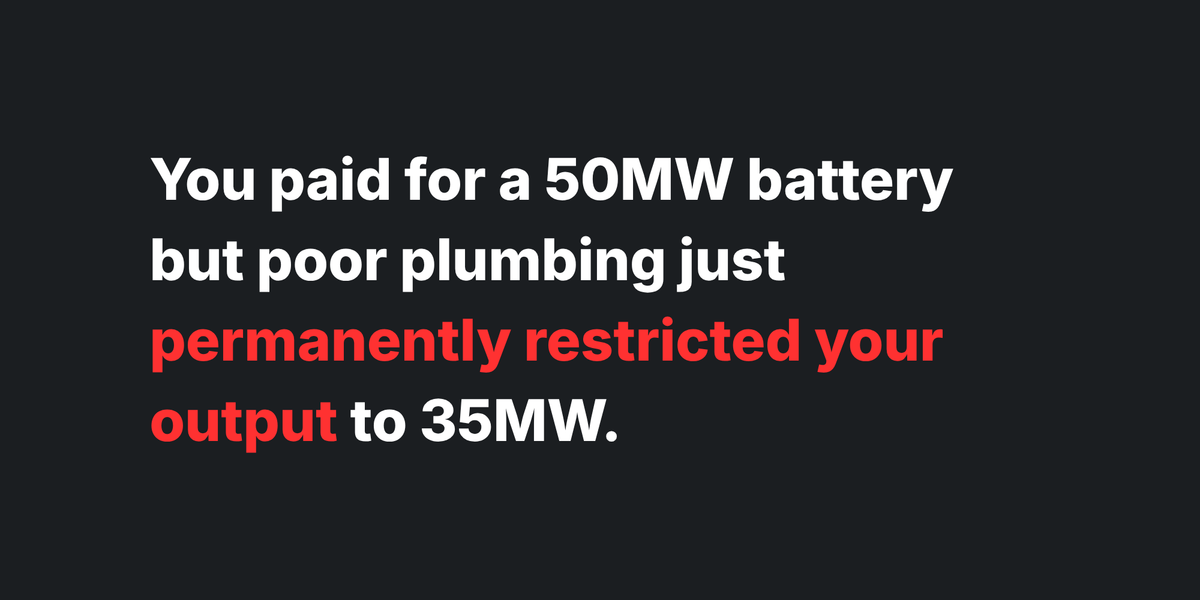
- The Lender Risk: The Debt Service Coverage Ratio is sized against peak power delivery. If poor localized plumbing permanently restricts the asset to 70 percent of its modeled output the project triggers an immediate liquidity crisis. You cannot service 100 percent of your debt on 70 percent of your yield.